
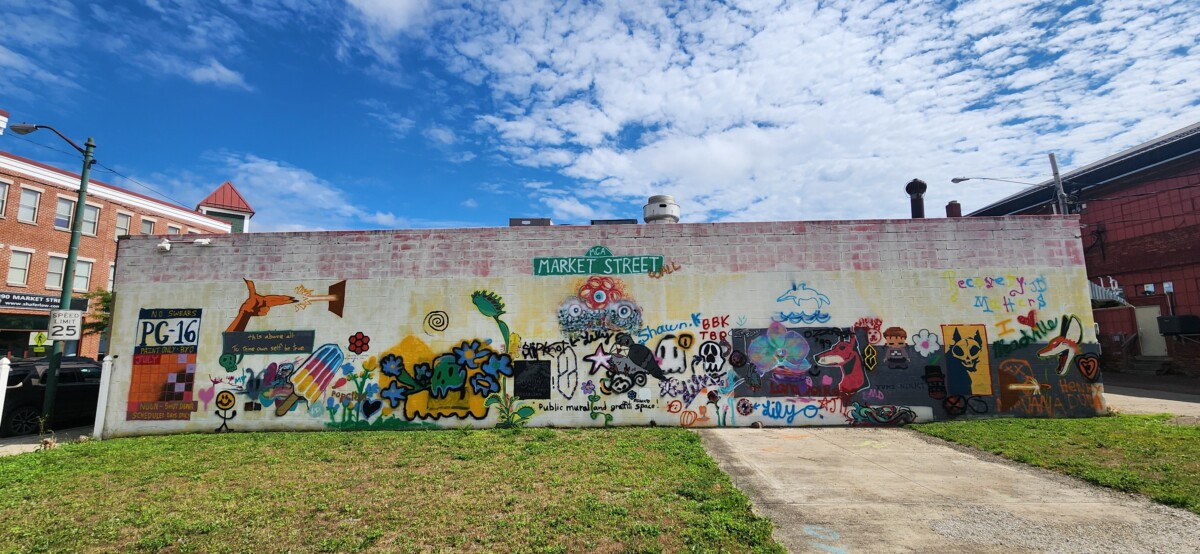
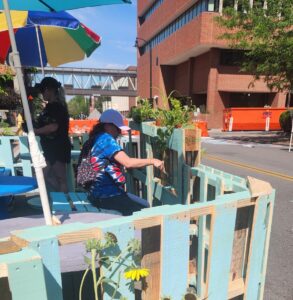
At the end of June, a Meadville Community Revitalization Corporation board member joined community leaders from across Pennsylvania for a hands-on tactical urbanism session during the Pennsylvania Downtown Center Conference in Erie. Presented in partnership with the Erie Downtown Partnership, the session did not take place only in a meeting room. Participants went outside and helped create temporary improvements in a downtown street—painting pavement, assembling a colorful gathering space and adding plants, seating and shade.
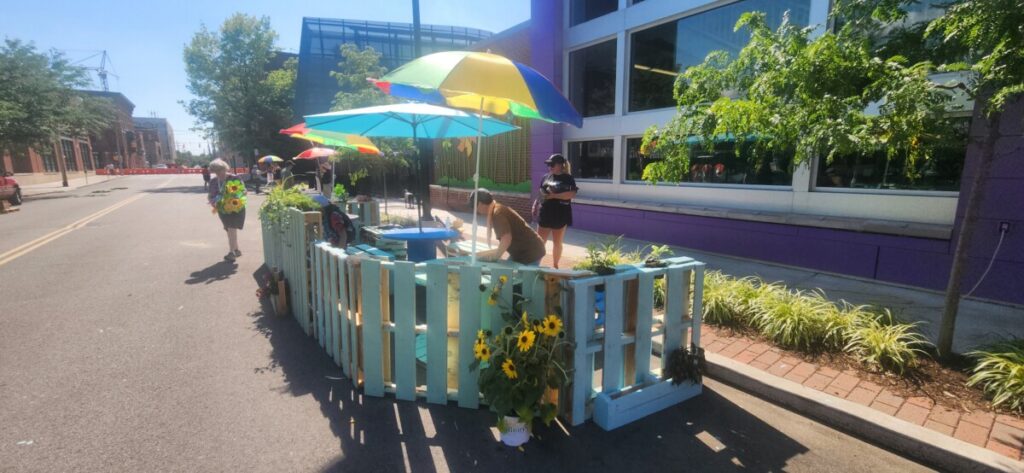
The experience demonstrated a simple but powerful idea: communities do not always have to wait for a major construction project to begin making public spaces safer, more inviting and more useful.
That idea is at the heart of tactical urbanism.
What is tactical urbanism?
Tactical urbanism uses short-term, relatively low-cost and scalable projects to explore how a street, sidewalk, park or other public space could work better. A project might remain in place for a day, a season or several years. The goal is often to test an idea, observe how people use it, gather feedback and make improvements before committing to a permanent investment.
Main Street America describes tactical urbanism as an approach that balances necessary long-term planning with visible, near-term action. Rather than allowing every idea to remain on a planning document, communities can ask: What is the smallest useful step we can take now? They can then implement that step, learn from it and continue improving. (Main Street America)
Examples can be as simple as refreshing planters, organizing a cleanup, installing temporary seating or conducting a walking audit. More involved projects might include pop-up bicycle lanes, painted curb extensions, murals, temporary pedestrian spaces or creative treatments for vacant storefronts. Projects affecting streets, traffic patterns or accessibility require coordination with the appropriate property owners and government agencies. (Main Street America)
In other words, tactical urbanism is not about making random changes to public property. It is about making thoughtful, collaborative “small bets” that help a community understand what works.
What could it look like in Meadville?
Meadville already has examples of the creativity and community spirit behind tactical urbanism.
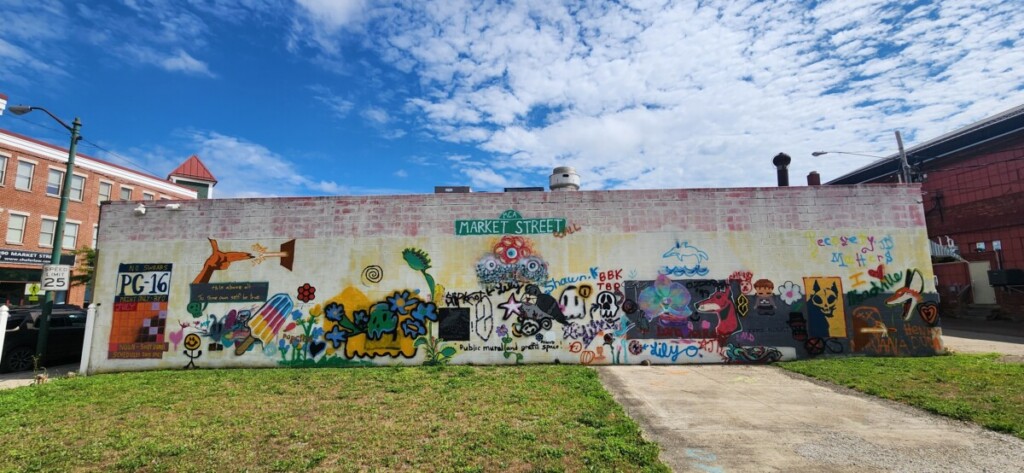
The Meadville Council of the Arts graffiti wall in the vacant lot along Market Street transformed an empty space into a place for expression, color and conversation. It reflects the character of the people who contributed to it while giving pedestrians something unexpected to discover. Temporary installations, seasonal decorations, sidewalk activities and community-created art can all help people experience familiar downtown spaces in new ways.
Future projects could include movable tables and chairs near local businesses, temporary plantings, painted pavement, artistic wayfinding signs, pop-up gathering areas or demonstration projects that help people envision stronger connections among downtown, French Creek and the surrounding trail network.
A project does not have to be large to make a difference. A few planters can help define a pedestrian area. A bench can create a place for an older resident to rest. A painted installation can draw attention to a crossing or invite families to linger. A temporary event space can show whether a previously overlooked area has the potential to support regular programming.
These projects can also reveal practical information. Do people use the seating? Does the space feel comfortable at different times of day? Can someone using a wheelchair move through it easily? Do nearby businesses see additional activity? What do residents like, dislike or want changed?
That feedback can lead to a better permanent project—and provide evidence that strengthens future designs, partnerships and funding applications.
Why this approach matters for MCRC
MCRC’s mission is to foster economic development in greater Downtown Meadville. Its work includes improving public spaces through lighting, sidewalks, greenspace and public art, while collaborating with residents, businesses and community partners. The organization also aims to build local pride and make downtown more attractive and accessible.
Tactical urbanism fits naturally within that mission because it connects placemaking with community participation. Instead of asking residents to react only to finished plans, it gives people opportunities to help build, use and evaluate an idea.
It can also produce the kinds of visible early wins identified during MCRC’s planning process. Potential early placemaking activities previously discussed for downtown included sidewalk chalk, planters, street lighting and gateway beautification. These modest interventions cannot replace major investments in buildings, infrastructure or streetscapes, but they can build momentum while longer-term work moves forward.
Main Street America also notes that visible projects can attract volunteers and strengthen relationships. People often become more interested in revitalization when they can see progress, contribute their skills and experience the results firsthand.
A way to learn together
The most valuable part of tactical urbanism may be the learning process. A temporary project gives the community permission to try an idea without pretending that the first version will be perfect. Successful elements can be expanded. Unsuccessful elements can be adjusted or removed. Each experiment adds to Meadville’s understanding of what residents, visitors and businesses need from downtown.
That spirit—observe, act, listen and improve—can help transform public spaces while strengthening trust and civic pride.
The colorful street project in Erie offered more than a conference exercise. It provided a glimpse of how people can work together to turn an idea into something tangible. Here in Meadville, tactical urbanism can help us do the same: start thoughtfully, invite participation and take visible steps toward the downtown our community wants to create.